The cannabis industry is undergoing a significant transformation.
As consumer awareness grows and environmental regulations tighten, brands are increasingly moving away from excessive plastics and non-recyclable materials.
However, the core challenge for packaging procurement lies in balancing these eco-friendly initiatives with strict child-resistant (CR) regulations.
This guide explores the best material choices, structural engineering techniques, and design strategies for creating sustainable THC cart boxes that protect both the environment and your brand’s operational compliance.
Why Sustainability is Critical for Modern THC Cart Packaging
Sustainability is no longer just a corporate social responsibility talking point; it is a vital procurement strategy.
Data consistently shows that modern buyers actively seek out and remain loyal to environmentally responsible brands, making eco-conscious THC cartridge boxes a strong competitive differentiator on retail shelves.
Furthermore, exercising regulatory foresight is essential.
By adopting sustainable practices now, businesses insulate themselves against stricter, impending environmental mandates across various jurisdictions.
Ultimately, transitioning away from single-use plastics to premium, sustainable paperboard elevates the perceived value of the product inside your THC cart boxes, signaling quality and mindfulness to the end consumer.
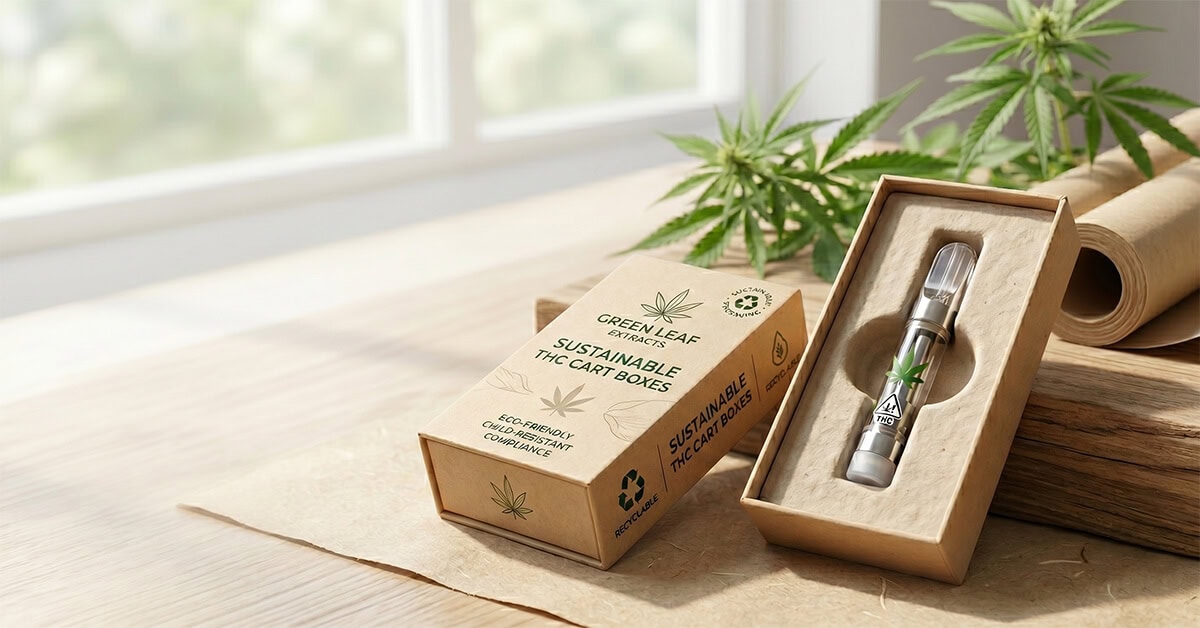
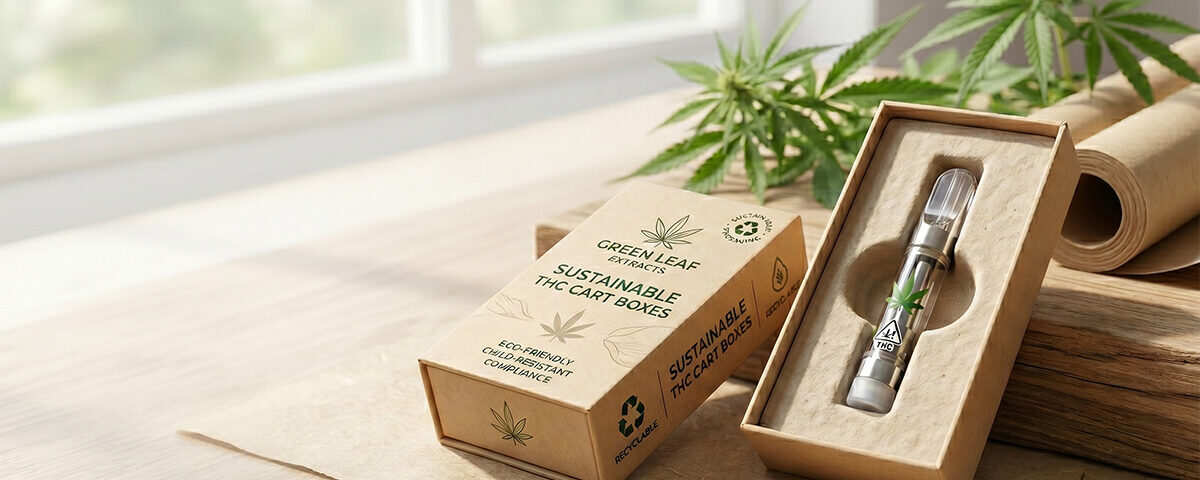
Image generated with Google Gemini
Top Eco-Friendly Material Options for THC Cart Boxes
Selecting the right substrate is the foundation of any sustainable packaging project.
Fortunately, paper manufacturing has advanced to offer highly durable, eco-friendly options.
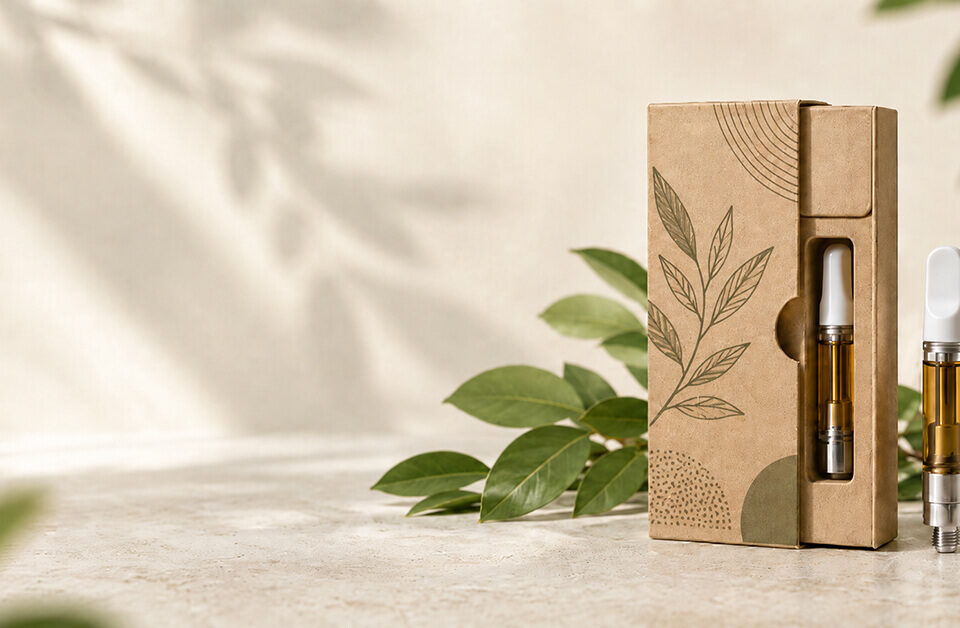
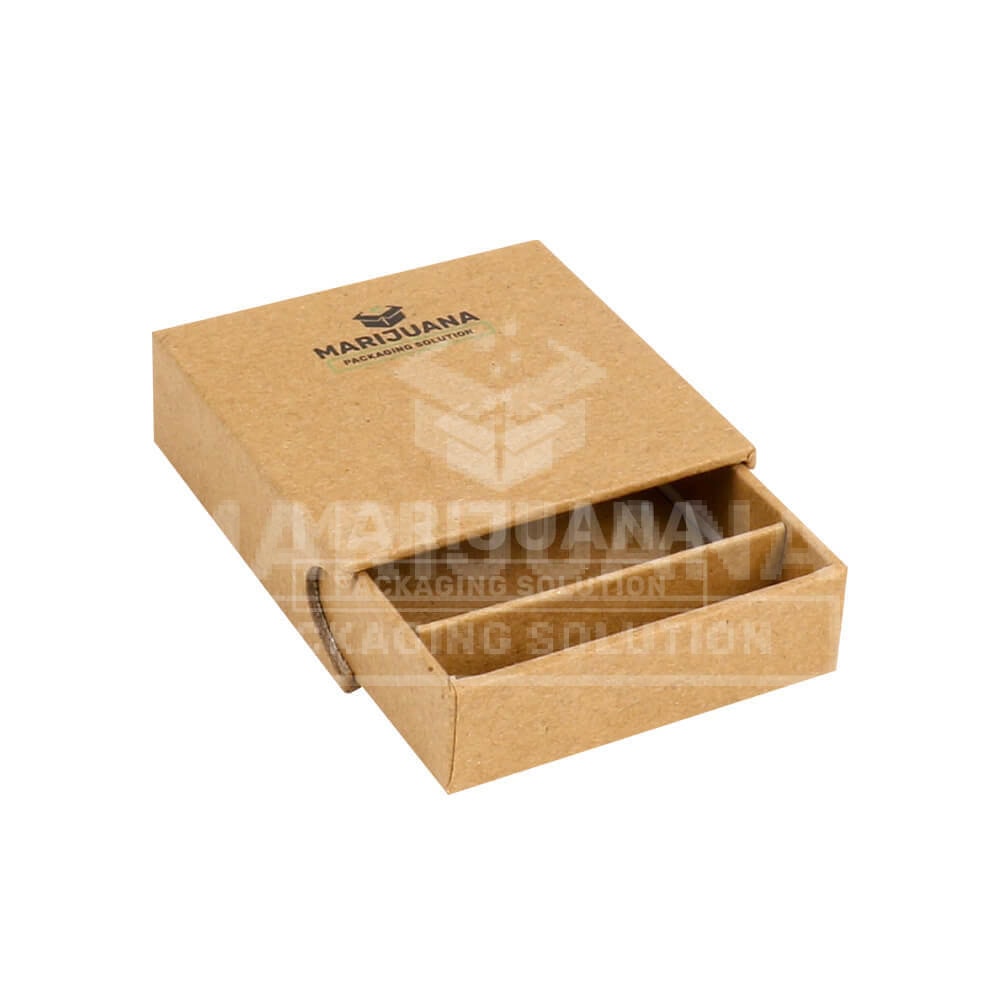
Recycled Kraft Paper: Utilizing post-consumer recycled Kraft paper provides a natural, rustic aesthetic that immediately communicates environmental responsibility to the consumer.
It is unbleached, biodegradable, and highly effective for minimalist brand identities.
Eco-Certified SBS Board: Brands do not have to sacrifice high-definition printing to be sustainable.
By utilizing Forest Stewardship Council (FSC) certified or heavily recycled Solid Bleached Sulfate (SBS) boards, you can achieve vibrant, photographic-quality finishes on custom THC cart boxes while ensuring responsible forestry practices.
Hemp-Based Paperboard: As an industry-relevant innovation, hemp fibers are increasingly being incorporated into packaging substrates.
Hemp is a fast-growing, highly renewable resource that yields exceptionally durable paperboard, making it a fitting and sturdy choice for cannabis products.
Sustainable Structural Engineering: Doing More with Less
Effective packaging design goes beyond the material itself; it encompasses the structural engineering of the box.
Right-Sizing the Packaging: Precise structural engineering minimizes excess material.
By eliminating “dead space,” you reduce the overall footprint of the packaging.
This not only decreases raw material usage but also optimizes shipping weight and pallet efficiency, reducing carbon emissions by keeping THC cart boxes as compact as possible.
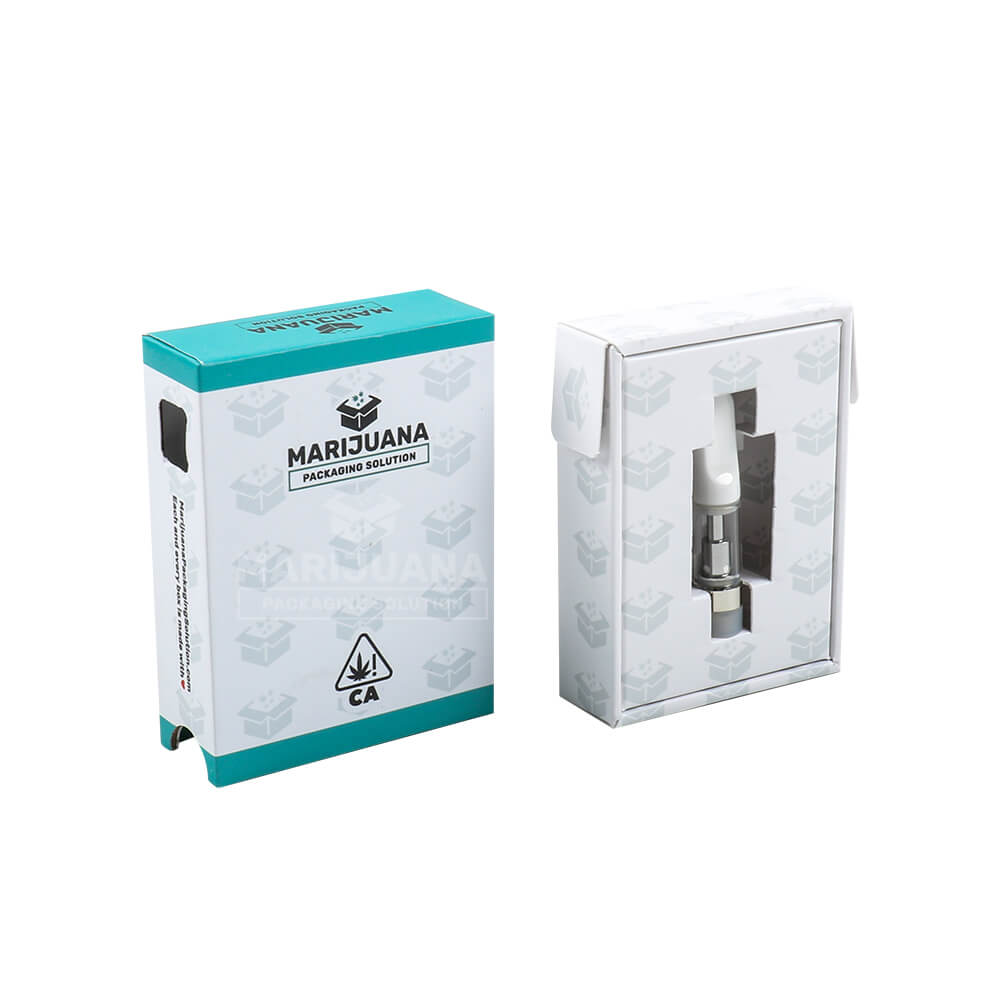
Eliminating Plastic Inserts: Historically, vaporizers have been secured using EVA foam or plastic blister trays.
Today, robust, eco-friendly alternatives exist. Custom-folded paperboard inserts or molded pulp can be engineered to suspend and secure fragile glass cartridges safely, entirely eliminating the need for internal plastics.
Eco-Conscious Printing and Finishing Techniques
The sustainability of THC cart boxes can be compromised if the wrong inks or coatings are applied during the finishing process.
Soy and Water-Based Inks: Replacing traditional petroleum-based inks with soy or water-based alternatives ensures that the packaging remains fully biodegradable and safe for the recycling stream.
Plastic-Free Finishes: Heavy plastic laminations (like standard soft-touch films) make paperboard difficult to recycle.
Instead, opt for aqueous coatings. To add tactile luxury to your THC cart packaging without environmental harm, utilize mechanical finishing techniques such as structural embossing, debossing, or precise foil stamping.
Balancing Child-Resistant (CR) Compliance with Sustainability
The most significant hurdle in cannabis packaging is the absolute necessity of meeting state-mandated CR standards.
Traditionally, this required heavy plastic locking mechanisms.
Today, packaging specialists are pioneering mono-material CR mechanisms.
Through innovative structural folding, purely paper-based, certified child-resistant designs—such as internal locking tabs or specialized push-release buttons—are now viable.
These engineering feats ensure that your THC cart boxes remain fully compliant with safety regulations while remaining 100% recyclable as a single paper unit.
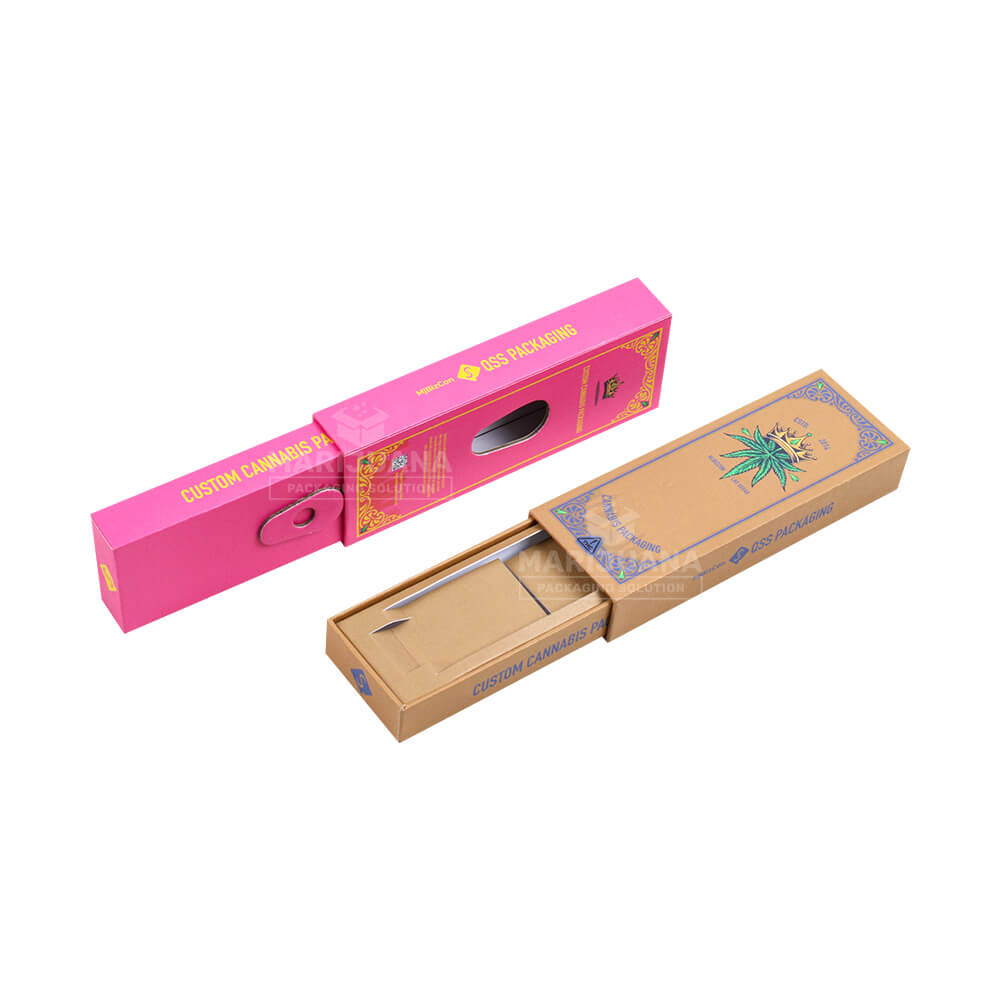
Detail shot of the innovative and eco-friendly child-resistant locking mechanism.
Investing in sustainable packaging is a strategic imperative that protects the environment, ensures regulatory compliance, and builds long-term brand equity.
By sourcing the right materials, eliminating plastic inserts, and utilizing innovative paper-based CR mechanisms, brands can deliver a premium unboxing experience.
To navigate these technical requirements effectively, procurement managers should consult closely with a dedicated packaging specialist to engineer the next generation of sustainable THC cart boxes.