

I. Introduction
In the highly competitive retail landscape of the cannabis industry, the structural integrity and functionality of your packaging are just as critical as the product inside.
Whether you are packaging premium CBD oils, artisan edibles, or high-potency tinctures, the box you choose serves as the first physical touchpoint between your brand and the consumer.
Among the most popular and versatile solutions available today are kraft tuck top boxes.
These eco-friendly packaging options not only align with the sustainable ethos of modern consumers but also offer robust protection.
However, beneath the surface of this standard packaging style lies a crucial structural decision: choosing between a straight tuck and a reverse tuck design.
While they may appear identical at first glance, this subtle difference significantly impacts assembly speed, aesthetic appeal, and overall manufacturing costs.
This guide will help brand operators make the most informed structural choice for their product lines.
II. The Fundamentals of Kraft Tuck Top Boxes
Before diving into the structural nuances, it is essential to understand why unbleached, natural packaging has become an industry standard.
The material used for kraft tuck top boxes is celebrated for its sustainable appeal, as it is highly recyclable, biodegradable, and requires fewer chemical treatments during production than bleached white paperboard.
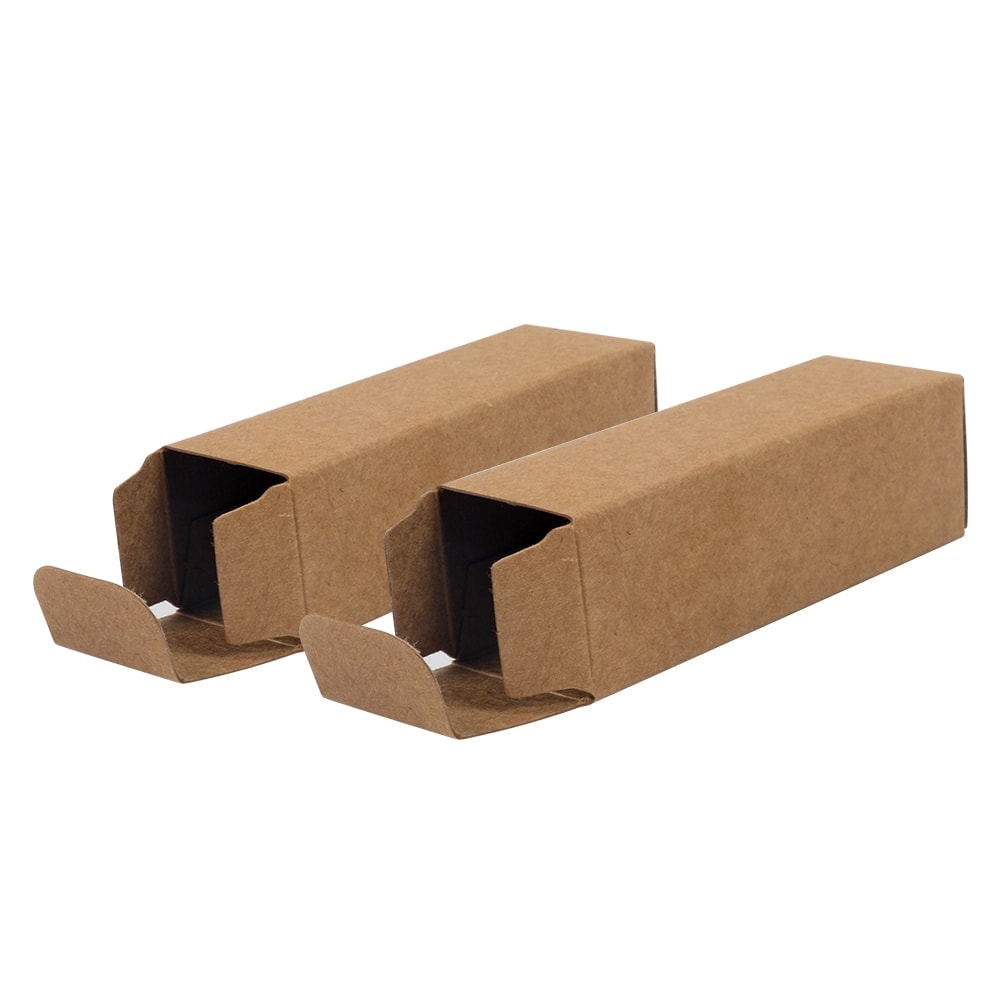
Structurally, a tuck end box is characterized by its simple yet effective anatomy:
it consists of a main body formed by four primary panels, closing flaps at both ends, and friction locks that keep the box securely closed without the absolute need for adhesive tape.
This combination of material strength and structural simplicity makes them incredibly reliable for retail shelving and consumer handling.
III. Deep Dive: What is a Straight Tuck End (STE) Box?
A Straight Tuck End (STE) box is defined by a specific folding mechanism where both the top and bottom closure panels fold in the exact same direction.
Typically, these flaps are attached to the front panel of the box and fold backward, tucking into the rear panel.
The primary advantage of choosing straight tuck kraft tuck top boxes is the resulting aesthetic.
Because both flaps fold to the back, the front face of the box is left completely clean and seamless, with no raw paper edges visible to the consumer.
This creates an uninterrupted canvas for your branding and a decidedly premium look.
Consequently, the straight tuck design is highly recommended for luxury cannabis products, high-end vape cartridges, cosmetics, or any product utilizing front-facing window cutouts where a pristine, flawless front panel is non-negotiable.
IV. Deep Dive: What is a Reverse Tuck End (RTE) Box?
Conversely, a Reverse Tuck End (RTE) box utilizes a folding mechanism where the top and bottom closure flaps fold in opposite directions.
For instance, the top flap may fold from the front to the back, while the bottom flap folds from the back to the front.
While this means a small raw edge will be visible at either the top or bottom of the front panel, reverse tuck kraft tuck top boxes offer a massive hidden benefit: manufacturing efficiency.
Due to their alternating flap structure, RTE boxes nest much closer together on a master dieline sheet during the die-cutting process.
This significantly reduces material waste and lowers the overall cost per unit.
Therefore, the reverse tuck design is ideal for lightweight items, bulk wholesale products, standard pre-roll packs, or brands operating on strict budget margins where cost efficiency outweighs the need for a perfectly seamless front panel.
V. Straight Tuck vs. Reverse Tuck: A Direct Comparison
When evaluating straight tuck versus reverse tuck kraft tuck top boxes side-by-side, brand managers must weigh several operational factors.
In terms of assembly and fulfillment, reverse tuck boxes often require slightly more manual dexterity to fold rapidly on a fast-paced production line due to the alternating motions, whereas straight tucks can be folded with a more repetitive, fluid motion.
However, the cost implications usually favor the reverse tuck, providing a better cost-to-benefit ratio for high-volume orders.
Structurally, both designs offer excellent integrity, but the straight tuck often performs slightly better when holding heavier items,
like thick glass dropper bottles, as the bottom flap is less likely to be pushed open by the weight compared to a reverse tuck bottom.
VI. Expanding the Strategy: E-Commerce Shipping Solutions
As the cannabis and CBD markets continue to shift heavily toward direct-to-consumer (D2C) sales, brand operators must look beyond the retail shelf and consider the logistics of postal transit.
Standard retail boxes, whether straight or reverse tuck, are designed for presentation, not for surviving the rigors of the postal network.
This is where integrating heavier corrugated shipping solutions becomes vital.
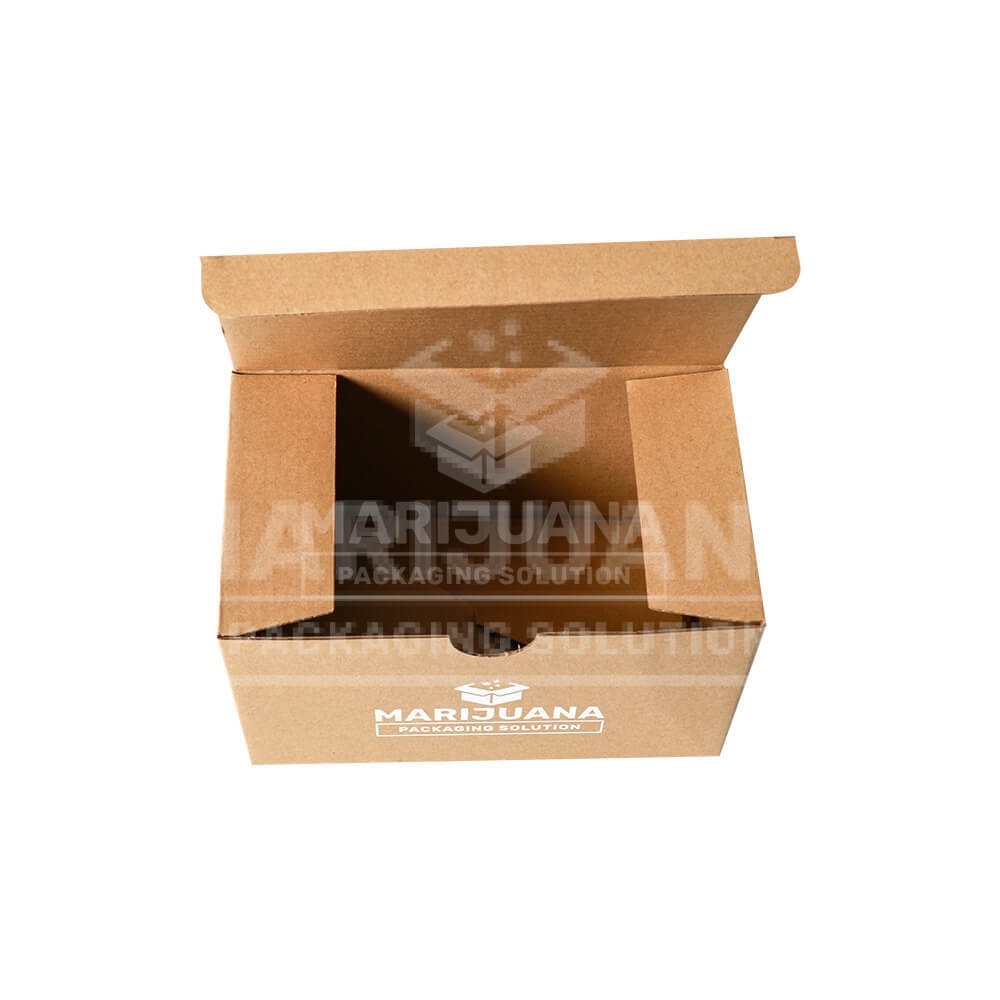
To safely transport your delicate retail items to a customer’s doorstep without damage, utilizing kraft tuck top mailer boxes is the industry best practice.
These mailers provide the necessary crush resistance and structural rigidity to protect your primary packaging, ensuring the unboxing experience remains premium upon arrival.
In summary, both straight and reverse kraft tuck top boxes are exceptional packaging choices that provide environmental benefits and robust product protection.
The right choice ultimately depends on whether your brand prioritizes a flawless, premium presentation or maximum material and cost efficiency.
We strongly encourage brand managers to request dielines and unprinted prototypes of both styles to test directly on their assembly lines with actual product weights.
If you are ready to optimize your packaging strategy, reach out to our packaging specialists today for a custom consultation to determine which kraft tuck top boxes will best serve your brand’s unique needs.