

In the contemporary packaging landscape, consumer preferences have noticeably shifted away from high-gloss laminations toward tactile, organic, and minimalist finishes.
This evolution is particularly vital in the cannabis industry, where brands must balance high-end retail aesthetics with the strict, uncompromising mandates of global cannabis child-resistant packaging regulations.
Uncoated white kraft paperboard achieves this balance perfectly.
Through a controlled bleaching process, the material retains its foundational fiber integrity and distinctive surface texture while offering a pristine, muted backdrop.
Selecting between folding carton and rigid box formats fundamentally alters a product’s shelf presence, but more importantly, it dictates how manufacturers engineer the requisite safety mechanisms to ensure regulatory compliance across international markets.
The Visual, Tactile, and Structural Anatomy of White Kraft Boxes
Uncoated white kraft is celebrated for its soft, diffuse matte finish.
Because the surface lacks a clay coating or synthetic laminate, it absorbs light rather than reflecting it, establishing a sophisticated visual weight.
Tactilely, the raw paper fibers provide a distinct “tooth” that feels substantial in the hand.
Beyond aesthetics, this fibrous network is the structural backbone of child-resistant compliance.
The long, densely packed fibers inherent to kraft paper provide exceptional tensile and tear strength.
This durability is mandatory for passing rigorous child-resistant certification testing, as the material must withstand repetitive twisting, squeezing, and pulling without structural failure or tearing that would grant unintended access to the cannabis products inside.

Strategy A: White Kraft Folding Cartons (Lightweight & Dynamic)
Folding cartons crafted from uncoated white kraft typically utilize substrates ranging from 14 pt to 24 pt in caliper.
These lightweight structures are highly dynamic, allowing for razor-sharp fold lines and efficient, slimline retail footprints.
In the context of global cannabis regulations, folding cartons require precise die-cutting to integrate hidden, child-resistant locking tabs.
Common compliant formats include specialized auto-lock bottoms and complex sleeve-and-tray slider boxes that require simultaneous, dual-action movements to disengage the lock.
The innate tear resistance of the white kraft substrate ensures that these hidden paperboard locks cannot be easily compromised or ripped open by children.
This format is the ideal solution for high-volume retail units, pre-rolls, and lightweight cannabis edibles requiring strict adherence to safety standards without sacrificing sleek, modern presentation.
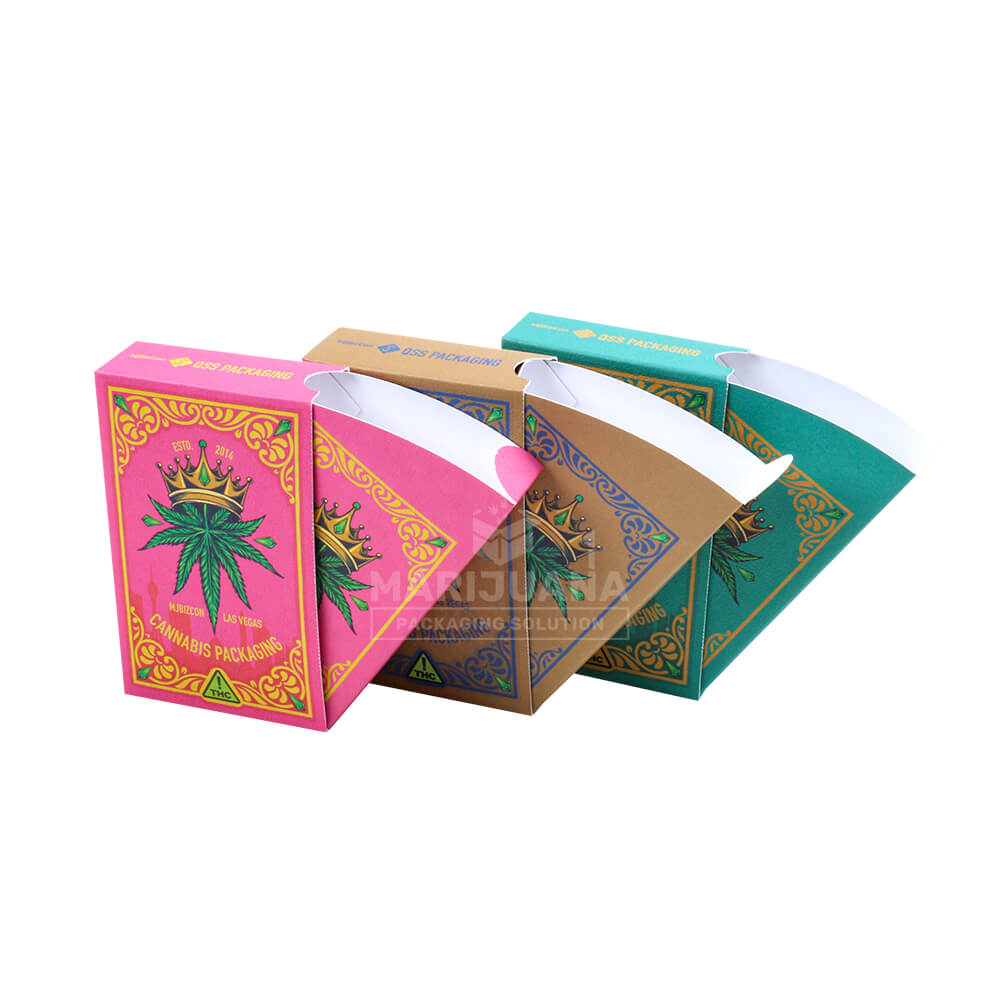
Organize and display your entire pre-roll collection with customizable color and size options.
Strategy B: White Kraft Rigid Boxes (Architectural & Substantial)
For premium product tiers, rigid boxes deliver unparalleled architectural stability.
These structures are constructed from heavyweight chipboard or greyboard (typically 600 gsm to 1500 gsm) wrapped seamlessly in custom uncoated white kraft paper.
The result is a substantial package with true 90-degree corners and significant physical heft.
The dense, unyielding walls of a rigid box provide an ideal framework for housing advanced child-resistant mechanisms, such as two-button side-release systems or securely housed magnetic latches.
Because the walls do not flex or bow under pressure, the internal child-resistant locking mechanisms maintain their integrity over the entire lifespan of the product.
This format delivers a ceremonial, deliberate unboxing experience perfectly suited for flagship flower releases, high-end concentrates, and limited-edition product drops where enduring safety and luxury are paramount.
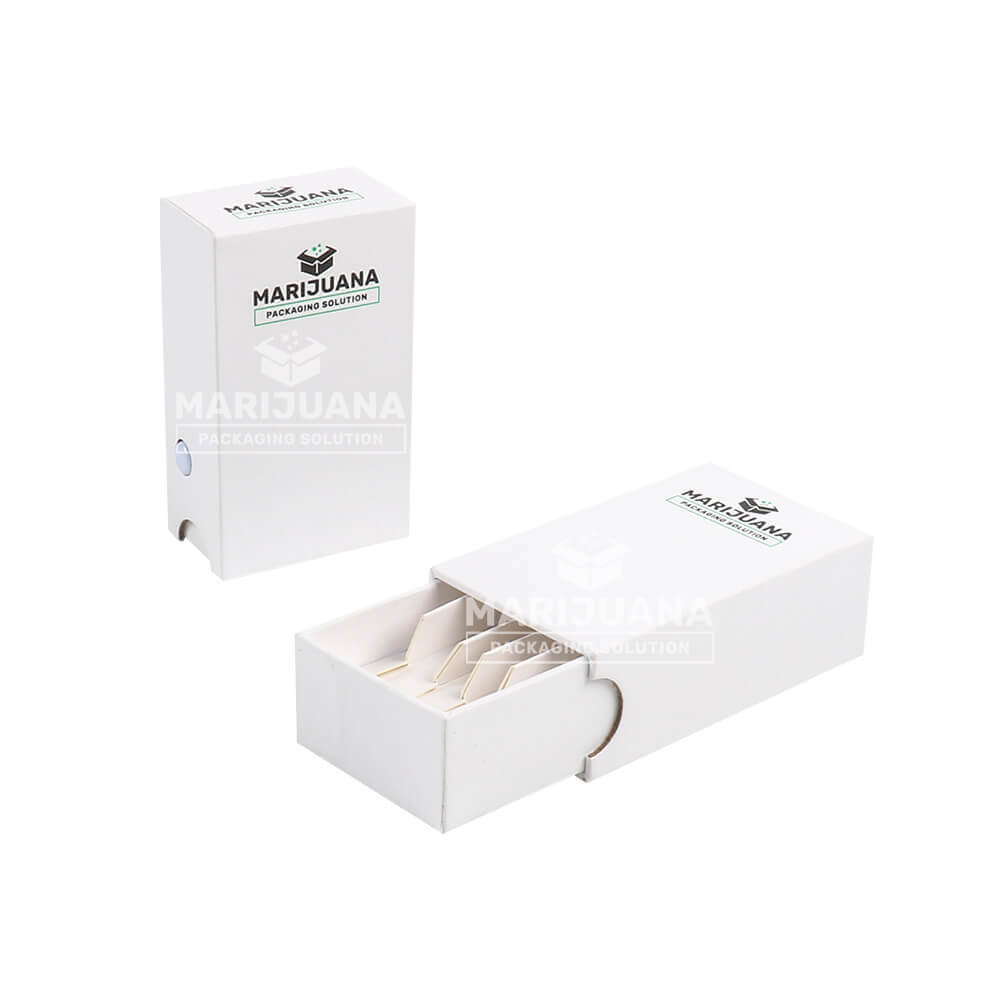
Comparative Analysis: Folding Cartons vs. Rigid Boxes
| Evaluation Metric | White Kraft Folding Cartons | White Kraft Rigid Boxes |
| Material Base | Single-ply paperboard (14–24 pt) | Heavy greyboard with wrapped kraft skin |
| Child-Resistant Mechanism | Integrated die-cut locking tabs | Housed push-button or slide-release systems |
| Testing Durability | Relies on high tear resistance | Relies on inflexible structural rigidity |
| Unboxing Experience | Fast, dual-action functional access | Deliberate, ceremonial, secure reveal |
| Shipping Profile | Ships flat; highly efficient | Ships fully assembled; requires more volume |
| Visual Hierarchy | Modern, approachable, clean | Luxurious, architectural, authoritative |
Enhancing Uncoated White Kraft Boxes: Printing & Finishing Techniques
Enhancing raw kraft surfaces requires a strategic approach to maintain both the visual appeal and the structural integrity required for child-resistant testing.
Brands often leverage bold monochromatic typography and earthy color palettes, allowing ink to naturally absorb into the uncoated surface for a muted, premium look.
Hot foil stamping in metallic or matte pigments creates a striking contrast against the organic paper without compromising the board’s strength.
Blind embossing and debossing utilize natural light and shadow to display logos elegantly;
however, packaging engineers must ensure that deep debossing does not weaken the paperboard at crucial stress points near the child-resistant locking mechanisms.
When custom inserts are utilized to secure the cannabis product, they must be tightly tolerance-tested to prevent internal shifting that could inadvertently disengage the safety locks.
Operational & Sustainability Considerations
As global cannabis markets expand, regulatory bodies and consumers alike are demanding sustainable solutions alongside strict child-resistant compliance.
Uncoated white kraft boxes provide significant environmental benefits, offering high recyclability and biodegradability.
The operational challenge lies in engineering mono-material child-resistant mechanisms—eliminating the need for secondary plastic locks or foam inserts.
By utilizing precise paper engineering, manufacturers can create highly secure, 100% paper-based locking trays that meet safety mandates while remaining fully recyclable.
Additionally, proper storage and humidity control in the warehouse are essential;
excessive moisture can soften paper fibers, potentially compromising both the scuff-resistant visual finish and the rigidity required to keep the child-resistant locks functional.
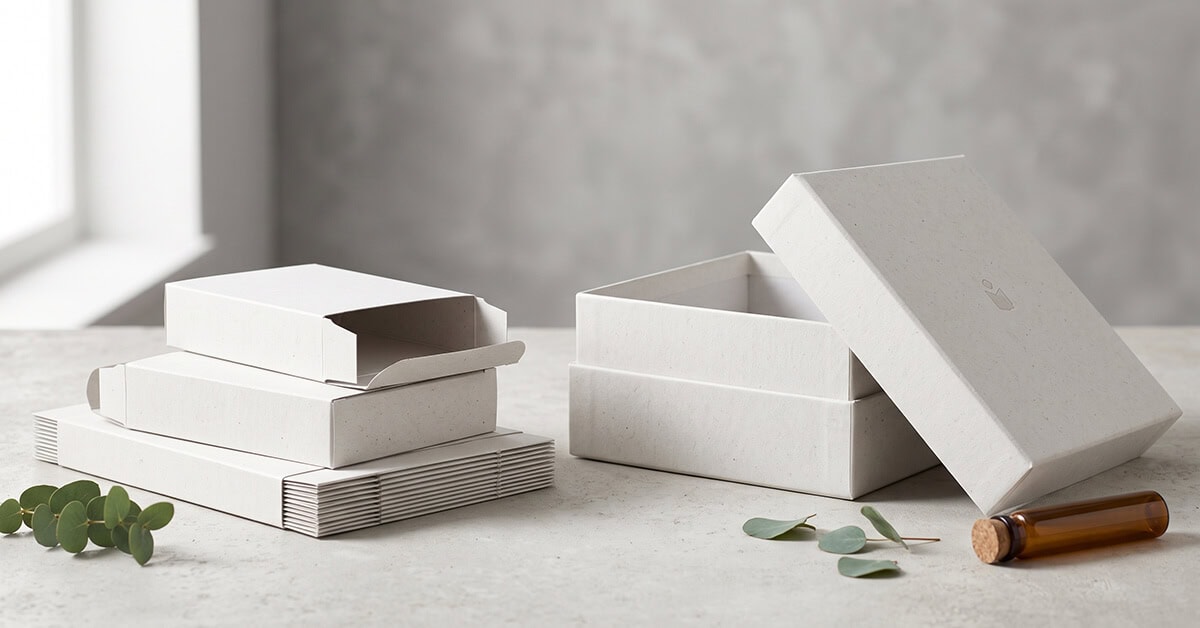
Image generated with Google Gemini
Navigating the intersection of premium retail aesthetics and mandatory global cannabis child-resistant packaging regulations is a complex endeavor.
Uncoated white kraft paperboard serves as a premier solution, offering a sophisticated, tactile canvas that inherently possesses the mechanical strength required for safety compliance.
When specifying packaging, brand managers must carefully evaluate their product tier and supply chain logistics.
Folding cartons offer a sleek, tear-resistant, and highly efficient solution for everyday products, while rigid boxes deliver the architectural permanence and secure locking housing required for top-tier luxury items.
By prioritizing material integrity and intelligent structural engineering, cannabis brands can confidently deploy packaging that protects consumers, satisfies international regulators, and elevates the unboxing experience.